buy guide
Unitree Robot: The Most Accessible Humanoid You Can Actually Buy
Unitree is shipping more humanoid robots than anyone else on the planet. Here is everything you need to know about their lineup, pricing, and what it is actually like to own one.
By Toronto Robotics Editorial
In This Guide
- Our Verdict
- Who It's For
- How We Tested
- Key Specs
- Alternatives
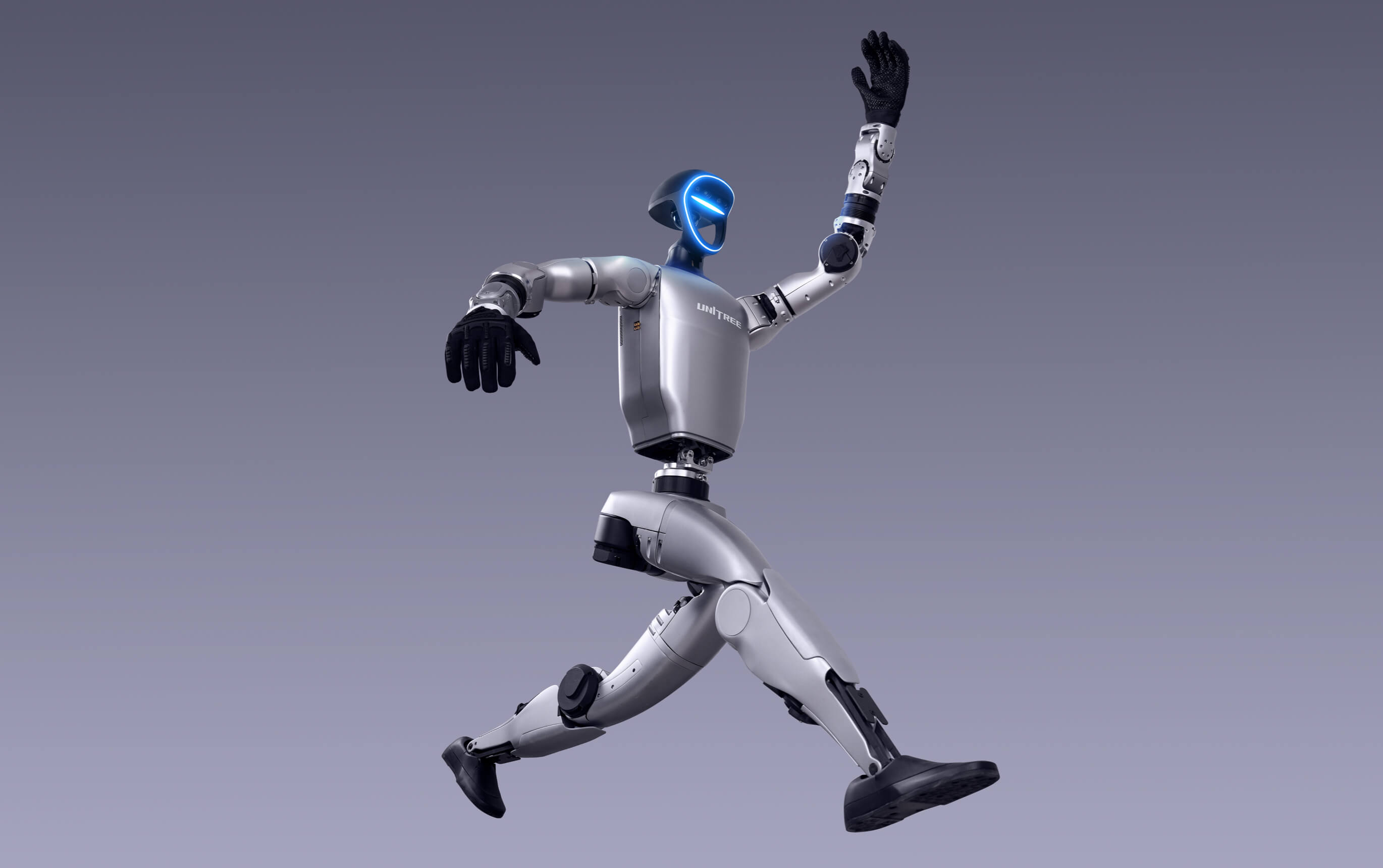
If you have been paying attention to the humanoid robot space, one name keeps coming up: Unitree. While other companies are still showing off prototypes and making promises, Unitree is shipping real robots to real customers. They shipped over 4,000 units in 2025 and are targeting up to 20,000 in 2026. No other humanoid manufacturer is operating at this scale.
Here is why Unitree deserves your attention, and why their robots are worth serious consideration if you are in the market.
The Lineup: Three Robots, Three Price Points
Unitree does not sell one robot. They sell a range, and the range is what makes them unique. You can enter the Unitree ecosystem for under $6,000 or go deep for $90,000 and beyond. No other company offers that kind of spread.
R1 — The Entry Point ($5,900)
The R1 is Unitree's newest and most affordable humanoid. At just 25 kilograms, it is ultra-lightweight and surprisingly agile. It debuted performing cartwheels and boxing-style movements. For under $6,000 you get a full bipedal humanoid with a complete SDK, making it the cheapest way to own a walking, moving humanoid robot in 2026. If you want to learn, experiment, or just own a piece of the future, this is where you start.
G1 — The Sweet Spot ($13,500)
The G1 is Unitree's flagship consumer humanoid and the one that put them on the map. Standing 1.32 meters tall with 23 degrees of freedom in its base configuration (expandable to 43 with the EDU models), the G1 balances serious capability with a price that universities, small labs, and serious enthusiasts can actually afford.
It folds down to suitcase dimensions (690 x 450 x 300mm), which means you can transport it in the back of a car. It walks at 2 meters per second, runs for about 2 hours on a charge, and swaps batteries in seconds. The sensor suite includes 3D LiDAR and Intel RealSense D435 depth cameras. It supports both imitation learning and reinforcement learning out of the box.
The G1 has been adopted by Amazon for robotics research, Stanford, MIT, and UT Austin. When institutions at that level are choosing your robot, it says something about the platform.
H1 — The Professional ($90,000+)
The H1 is adult-sized at 1.8 meters, hits a top speed of 3.3 meters per second (the fastest bipedal robot in its class), and produces up to 360 Nm of joint torque. This is the robot for enterprise research, human-scale environment testing, and heavy-payload applications. It is not a consumer product, but it rounds out the lineup and shows where Unitree's technology ceiling sits.
Why Unitree Stands Out
Price That Actually Makes Sense
The single biggest barrier to humanoid robot adoption has been cost. When competitors are quoting $50,000 to $150,000 for a single unit, most buyers are locked out. Unitree broke that barrier. A G1 at $13,500 is within reach of university equipment budgets, corporate R&D departments, and well-funded individuals. The R1 at $5,900 opens the door even wider.
This is not a race to the bottom on quality. Unitree achieves these prices through manufacturing scale and vertical integration in Hangzhou, China. They design and build their own actuators, control boards, and software stack.
Real SDK, Real Development Platform
Every Unitree robot ships with full SDK access. You are not buying a locked-down appliance. You are buying a development platform. The G1 supports ROS2, Python APIs, and direct motor control. The research community has embraced it precisely because you can actually build on it.
If you are a developer, researcher, or tinkerer, this matters more than any spec sheet number. The robot is only as useful as what you can make it do, and Unitree gives you the tools to make it do almost anything.
Proven at Scale
Unitree shipped roughly 4,200 humanoid units in 2025, second only to Agibot among Chinese manufacturers and far ahead of any Western competitor. When you buy a Unitree robot, you are buying into an ecosystem with thousands of other users, an active developer community, and a company with proven manufacturing and logistics capability.
This is not a crowdfunded prototype or a pre-order promise. These are shipping products with established supply chains.
Build Quality and Engineering
The G1 uses force-position hybrid control, which means it can handle physical interaction without toppling. The 3D LiDAR gives it genuine spatial awareness. The dexterous hand option (Dex3-1) adds 7 degrees of freedom per hand with active thumb, index, and middle finger control.
The H1 demonstrated world-record bipedal speed at 3.3 m/s when it launched, proving that Unitree's actuator and control technology is genuinely world-class, not just budget-friendly.
Compact and Portable
The G1 folds into a package smaller than a carry-on suitcase. For researchers who move between labs, present at conferences, or need to transport equipment between sites, this is a practical advantage that no competitor matches. Most humanoid robots require crates and logistics planning. The G1 fits in your trunk.
Who Should Buy a Unitree Robot
University Robotics Labs — The G1 is the de facto choice for labs operating within $40,000 to $75,000 equipment budgets. Full SDK, strong community, proven platform.
Corporate R&D Teams — If your company is exploring humanoid robotics, a G1 lets you start building without a six-figure commitment.
Robotics Enthusiasts and Developers — The R1 at $5,900 is the first humanoid that a serious hobbyist can justify. Full bipedal locomotion, SDK access, and a real development platform.
Entertainment and Events — Unitree's robots have performed at the Chinese Spring Festival Gala and numerous tech events. They are camera-ready and audience-tested.
Educational Institutions — The EDU configurations with up to 43 degrees of freedom and dexterous hands provide a comprehensive teaching platform for robotics programs.
The Bottom Line
Unitree is not the most famous name in robotics. They are not backed by the hype machine that surrounds Tesla Optimus or Boston Dynamics Atlas. What they are is the company that actually ships affordable, capable humanoid robots at scale.
If you want to own a humanoid robot in 2026, Unitree is the most realistic path to get there. The R1 gets you in the door for under $6,000. The G1 gives you a serious platform for $13,500. The H1 serves professional and enterprise needs. The SDK is open, the community is active, and the robots are proven.
Stop watching demos. Start building.