news
Home Automation Robots: How Humanoids Are Reshaping Smart Homes in 2026
Humanoid robots are becoming the ultimate smart home device, integrating with home automation systems and serving as physical interfaces for IoT ecosystems.
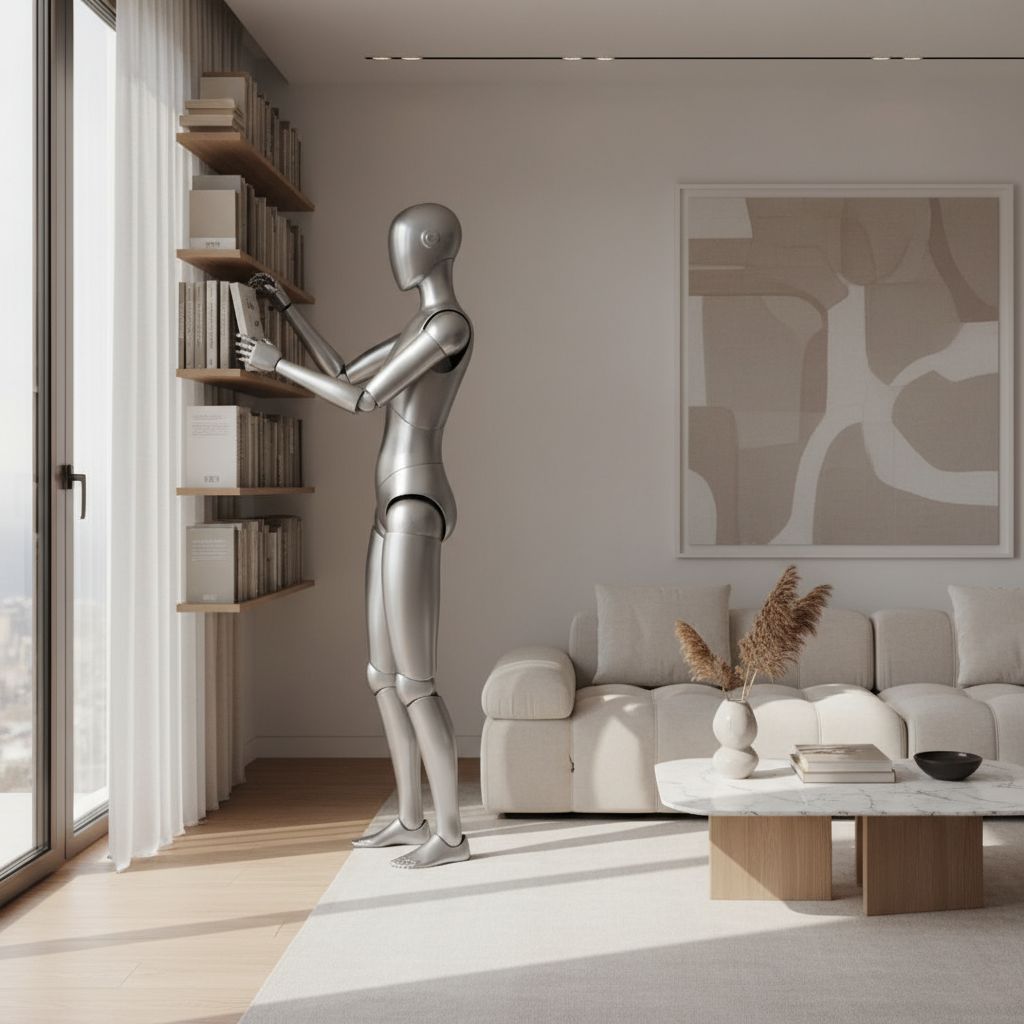
The smart home of 2026 doesn't just have connected devices—it has a robot living in it. Humanoid robots are becoming the central hub for home automation, replacing voice assistants with physical, embodied interfaces. ## Beyond Voice Commands Alexa, Siri, and Google Assistant brought voice control to homes. Humanoid robots take the next step: they're physical entities that can execute complex home automation tasks and serve as a unified interface for all smart home devices. Rather than giving voice commands to invisible assistants, you can ask your humanoid robot to adjust the thermostat, open the blinds, start the washing machine, or check on the front door camera. ## The Physical Interface Advantage Humanoid robots as smart home hubs offer advantages over pure software: - **Physical presence**: More intuitive than talking to thin air - **Embodied interaction**: Can physically adjust things, not just control them digitally - **Visual feedback**: Robots can show status through movement and expression - **Learning**: Can improve responses based on home-specific patterns ## Integration with Smart Home Ecosystems 2026 robots integrate seamlessly with: - Lighting systems (Philips Hue, LIFX) - Climate control (Nest, Ecobee) - Security systems (Ring, Logitech) - Appliances (Samsung SmartThings) - Entertainment systems A single robot can orchestrate your entire home's connected devices. ## Consumer Smart Home Adoption Early smart home adopters are upgrading to humanoid robot interfaces. Rather than replacing all existing smart devices, they're adding a robot that coordinates across them. This creates a market where even people with modest smart home investment benefit from a robot interface. ## Privacy and Security Concerns Having a robot continuously present in your home raises privacy questions: - Always-on cameras and microphones - Data collection about routines and preferences - Security vulnerabilities in connected home systems - Who has access to home data Manufacturers are addressing these concerns with local processing, encryption, and privacy controls. ## The Convergence 2026 marks the convergence of three trends: 1. Humanoid robots becoming consumer-available 2. Smart homes becoming mainstream 3. AI becoming sophisticated enough for embodied home management The result is homes that feel like they have a helpful resident. ## Market Opportunity The smart home market was already worth billions. Humanoid robots could dramatically expand it by providing the physical interface that ties everything together. Companies that successfully integrate robots with smart home platforms could own the central hub in millions of homes—a lucrative position. ## What's Coming Next As robotics improves, expect home robots to handle increasingly complex tasks—not just smart home control, but actual physical home maintenance, cleaning, and assistance. The home of 2030 might have a robot that orchestrates everything from security to maintenance to companionship.Read More
Original Source →