news
The Choreography of Tomorrow: Why China's Dancing Humanoids Are More Than a Party Trick
A synchronized display of bipedal agility signals a massive leap in commercial robotics. Here is why you should take these rhythmic machines seriously.
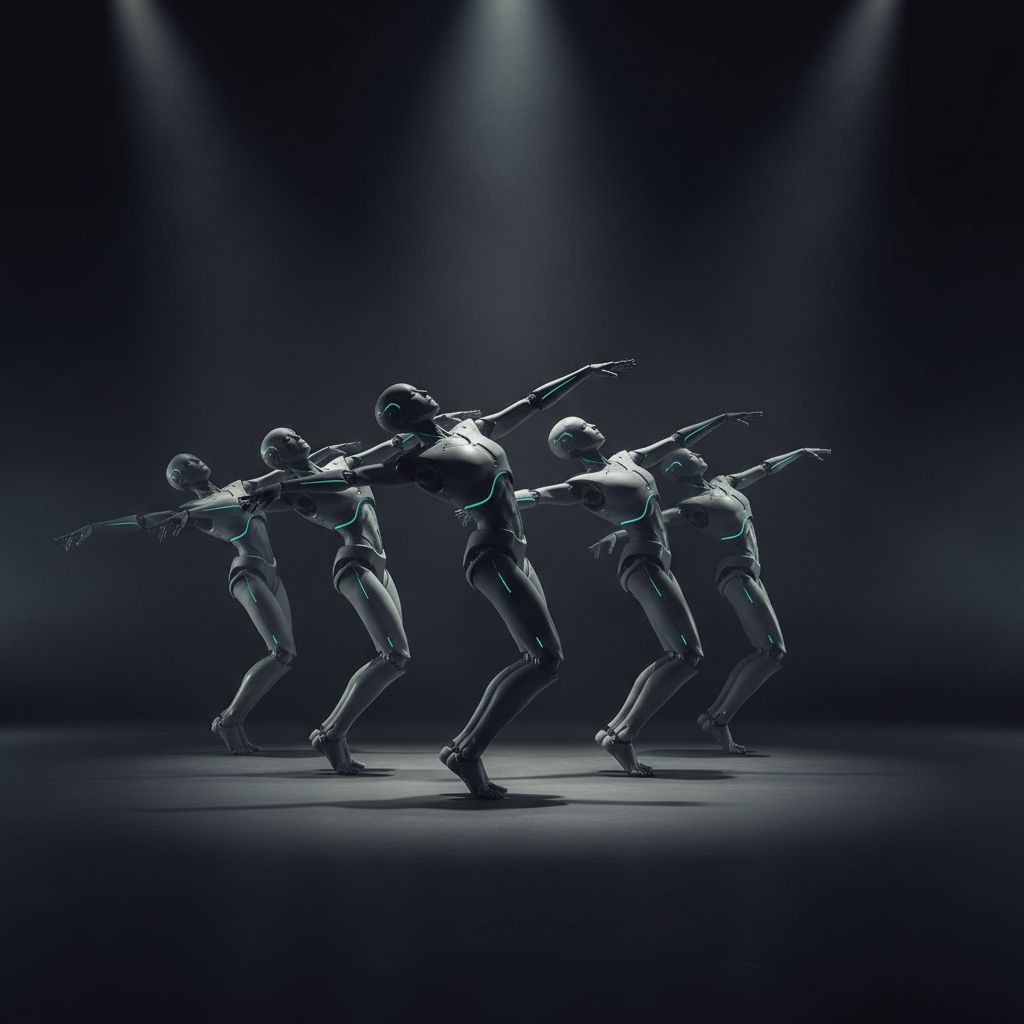
When a fleet of humanoid robots takes the stage in perfect synchronization, the immediate reaction is often a mix of amusement and skepticism. It feels like a futuristic parlor trick—a highly orchestrated stunt designed for viral consumption rather than practical utility. However, beneath the polished exterior of these viral videos lies a profound demonstration of the current state-of-the-art in robotics engineering. To make a bipedal machine walk across a flat laboratory floor is a triumph of physics. To make a dozen of them dance in unison requires a staggering confluence of dynamic balance, low-latency motor control, and real-time spatial awareness. The fluidity required to execute a dance routine means that a robot's actuators must possess zero-backlash precision and immediate torque responsiveness. Every pivot, dip, and arm extension shifts the machine's center of gravity in unpredictable ways. The onboard AI must calculate these micro-adjustments hundreds of times per second, preventing a catastrophic tumble while maintaining exact rhythmic synchronization with its peers. For the consumer market, these performances are a vital proof of concept. The same processing architecture that allows a humanoid to maintain its balance during a complex dance sequence is what will eventually allow it to carry a tray of glassware across a cluttered living room, or safely yield when bumped by a running child. The dancing humanoids we see today are not just entertainers; they are the agile, dynamically stable ancestors of the domestic assistants that will inhabit our homes tomorrow. The choreography is merely the ultimate stress test.Read More
Original Source →